Unified MTKCore naming, Workbench and projector improvements in Manufacturing Toolkit 2026.1
Review the unified MTKCore naming and explore Workbench and projection algorithm updates

Unified MTKCore binary and package naming
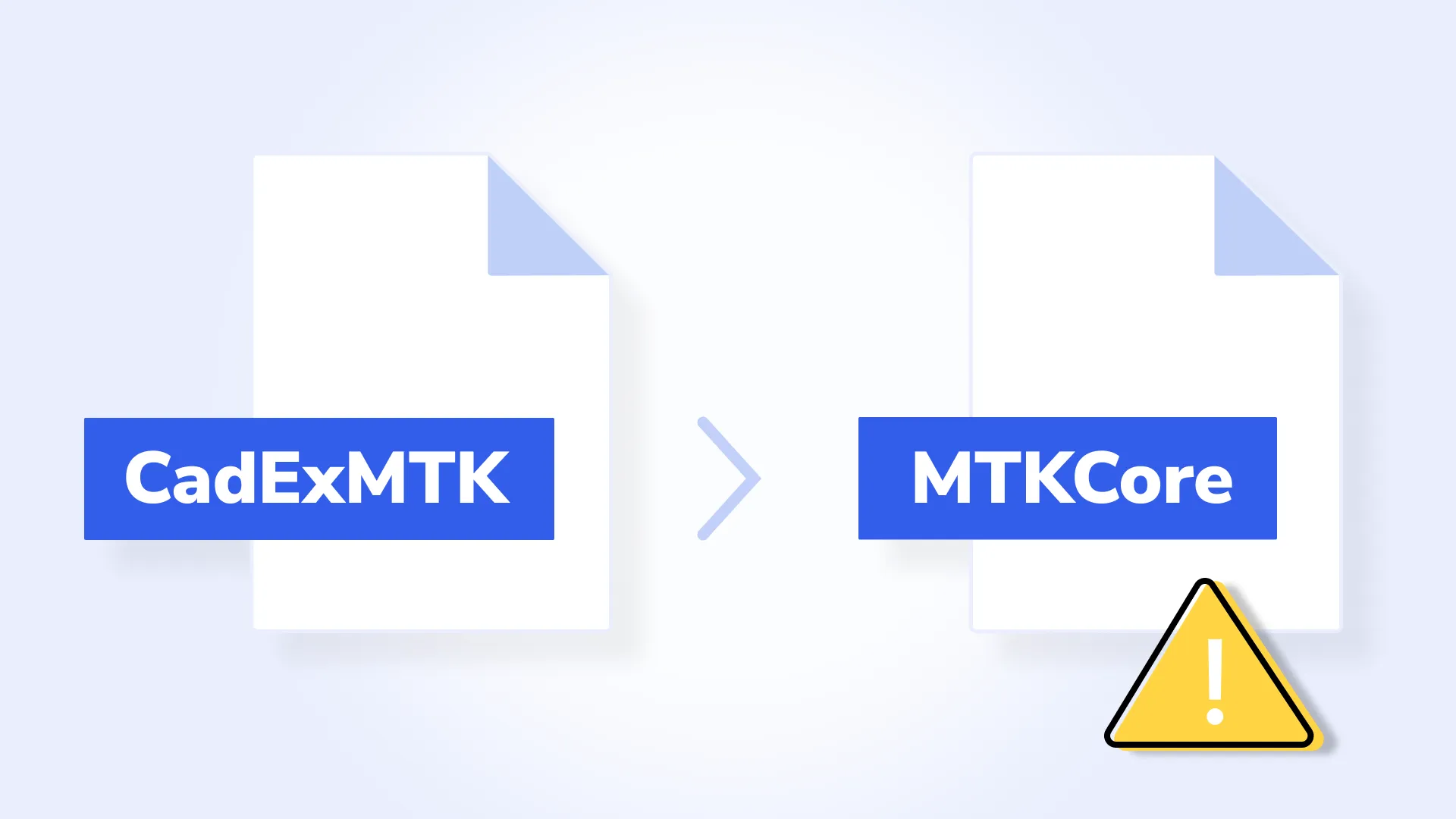
As part of ongoing efforts to improve consistency and clarity across the Manufacturing Toolkit ecosystem, the core MTK binaries have been renamed from CadExMTK to MTKCore. This change aligns binary naming with the updated CMake package name, which has been renamed from CadEx::MTK to MTK::Core.
To maintain a consistent developer experience, all language wrappers have been updated to reflect the new package and binary names. This ensures clearer separation of MTK core functionality, simplifies integration, and reduces confusion when working across different languages and build systems.
The following updates have been applied:
- Python: manufacturingtoolkit.CadExMTK → manufacturingtoolkit.MTKCore
- C#: CadExMTKNet.dll → MTKCoreNet.dll
- Java: CadExMTKJava.jar → MTKCoreJava.jar
Please note: if you are upgrading from a previous release, you will need to update your projects accordingly. This includes adjusting import statements, package references, dependency declarations, and build scripts to use the new MTKCore names. Failing to update these references may result in build or runtime errors.
Projector updates
The projector in MTK is a tool used to compute geometric projections of 3D model parts onto a plane. It takes model topology, generates a projection in a specified direction, and returns structured data such as projection regions and contours, which you can directly use for analysis and visualization.
Projection API enhancements
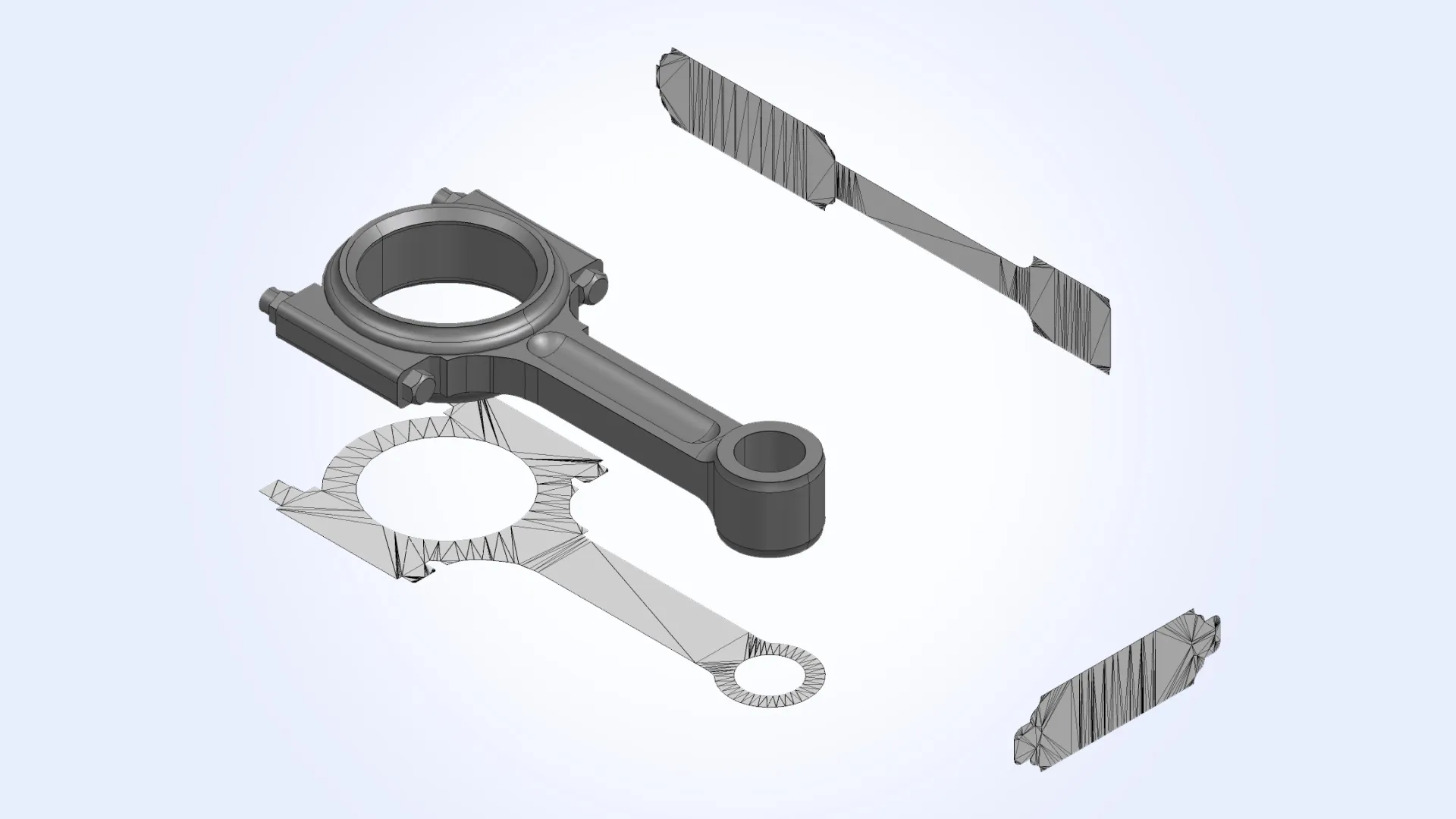
The projection API has been extended to provide richer and more flexible access to projection results. Instead of returning only numeric projection metrics, you can now also retrieve projection regions as structured geometry in the form of polylines or meshes for advanced processing and visualization.
As part of this update, Projector_PolyData has been replaced with the new Projector_Projection class, which serves as the entry point to the updated projection API.
Two new supporting classes have been introduced:
- Projector_ProjectionContour, which represents individual outer or inner contours
- Projector_ProjectionRegion, which models a continuous projection region—typically corresponding to a solid projection—defined by one outer contour and zero or more inner contours. You can now access projection regions as polylines or meshes through Projector_Projection::ProjectionRegionList()
This structured representation makes it easier to analyze projection topology and integrate projection results into manufacturing, analysis, or visualization workflows.
The Projector example has been updated to match the new Projector_Projection API.
Improved projection algorithm performance

The projection algorithm has been significantly optimized, delivering up to a 5× performance improvement compared to previous releases. These optimizations reduce computation time when projecting complex 3D topology, making projection-based workflows noticeably faster and more responsive.
MTK Workbench improvements
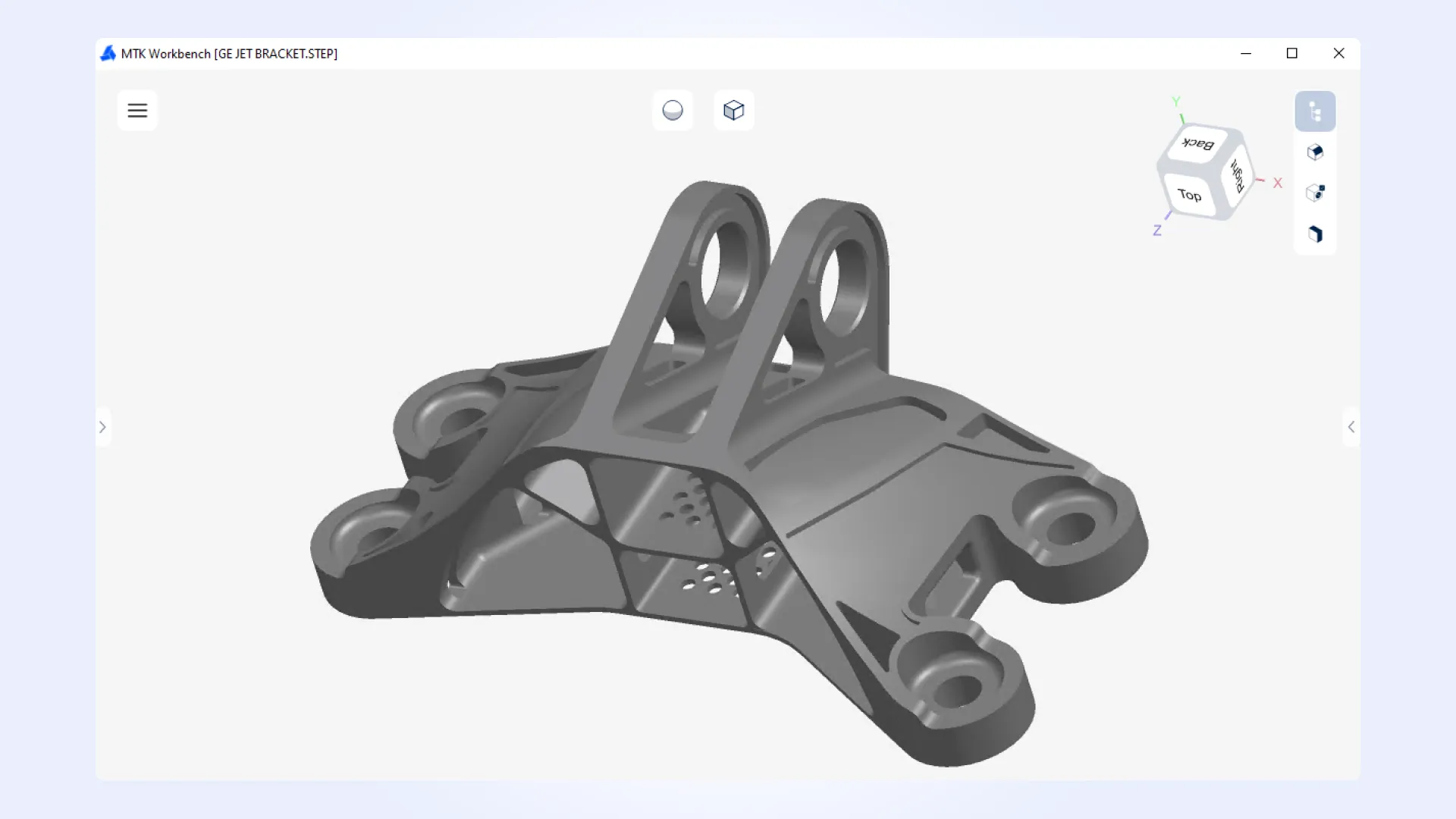
MTK Workbench continues to evolve as a practical environment for testing, and deep analysis of MTK workflows.
A new Shaded Without Boundaries display mode has been added to improve visual clarity when working with complex models. This mode renders the model without edge outlines, reducing visual noise and making it easier to focus on surface shape, curvature, and overall form.
Turning Face grouping has been refined by using the actual Machining_FaceType, rather than a generic classification. This change improves the accuracy and consistency of face grouping in turning workflows, making machining intent easier to interpret and reducing ambiguity during analysis.
Wall Thickness visualization improvements in MTK Web
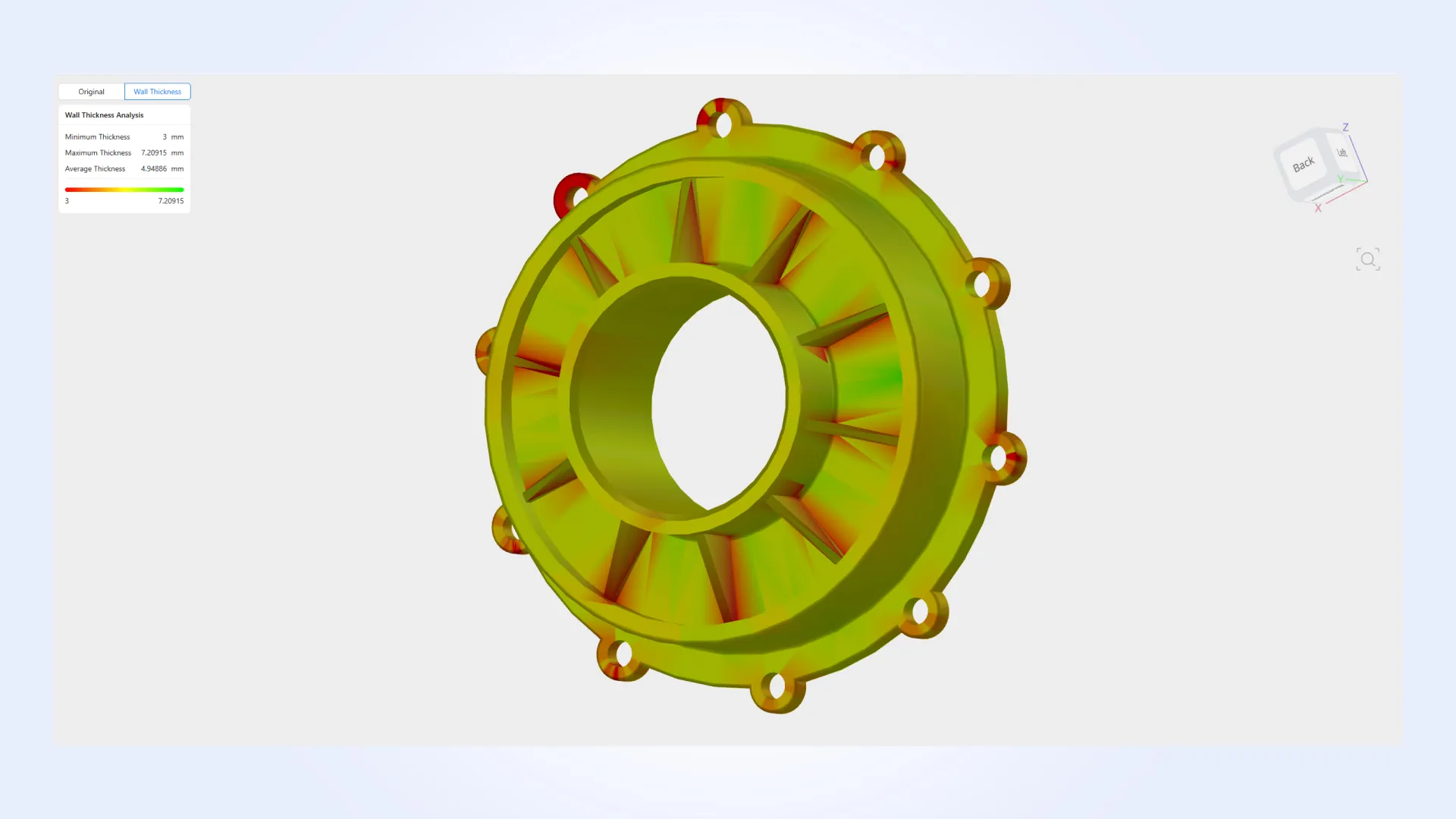
Mesh generation for solids has been updated to address previously missing surface normals, ensuring that meshes produced for the Wall Thickness process now contain complete and consistent normal data. As a result, the MTKConverter Wall Thickness process correctly exports normals to the MTKWEB format, improving lighting accuracy, shading consistency, and overall visualization quality in MTK Web.
To support these changes, the C#, Java, and Python MTKConverter examples for the Wall Thickness process have also been updated to generate all required data for MTK Web visualization.
Removal of Python 3.7–3.9 support

Support for deprecated Python 3.7–3.9 packages has been removed from the distribution. These Python versions have reached the end of their active lifecycle and no longer receive regular updates, which limits the ability to maintain compatibility, performance, and security across MTK.
Starting with this release, MTK is distributed only with packages for Python 3.10 through 3.13. We recommend upgrading your environment to one of the supported Python versions to ensure continued access to new features, improvements, and long-term support.
In addition, this release includes several minor improvements across the Manufacturing Toolkit. For the complete list of updates in MTK 2026.1, please refer to the CHANGES.txt file.