Deep bored hole DFM check
Deep bored hole overview
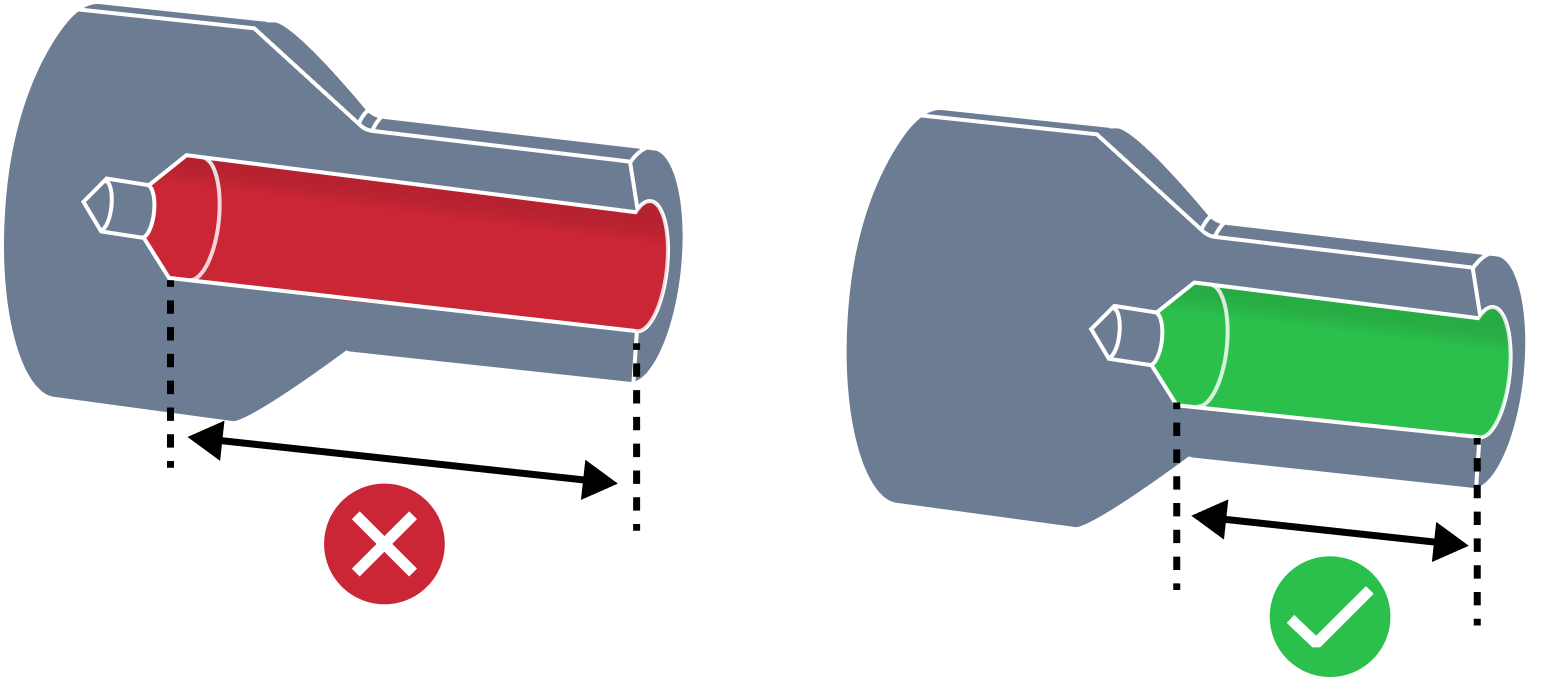
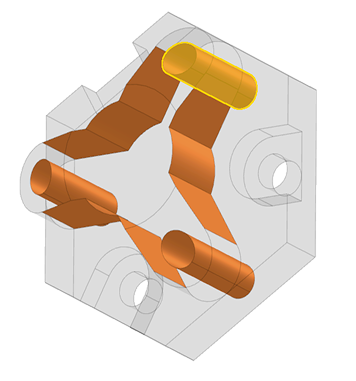
Deep bored hole issue in CNC machining turning design refers to the challenge of creating deep and narrow holes in a workpiece using a turning process.
The issue arises due to the length-to-diameter ratio of the boring tool, which affects the stability and precision of the process. As the depth of the hole increases, the tool's deflection increases, reducing accuracy and causing tool failure.
Deep bored hole detection conditions
MTK identifies this issue when the following condition is met:
where:
- — actual bored hole depth
- — actual bored hole diameter
- — expected maximum bored hole depth to diameter ratio
How MTK detects deep bored holes
MTK automatically analyzes B-Rep CAD models for deep bored holes. The SDK checks the relevant geometry against DFM criteria to identify potential issues that can increase manufacturing complexity or cost, or lead to quality or assembly problems.
Documentation and API reference
Detailed API reference for the deep bored hole DFM check is provided in the MTK documentation, including issue classes, detection interfaces, and integration details.