Small depth blind bored hole relief DFM check
Small depth blind bored hole relief overview
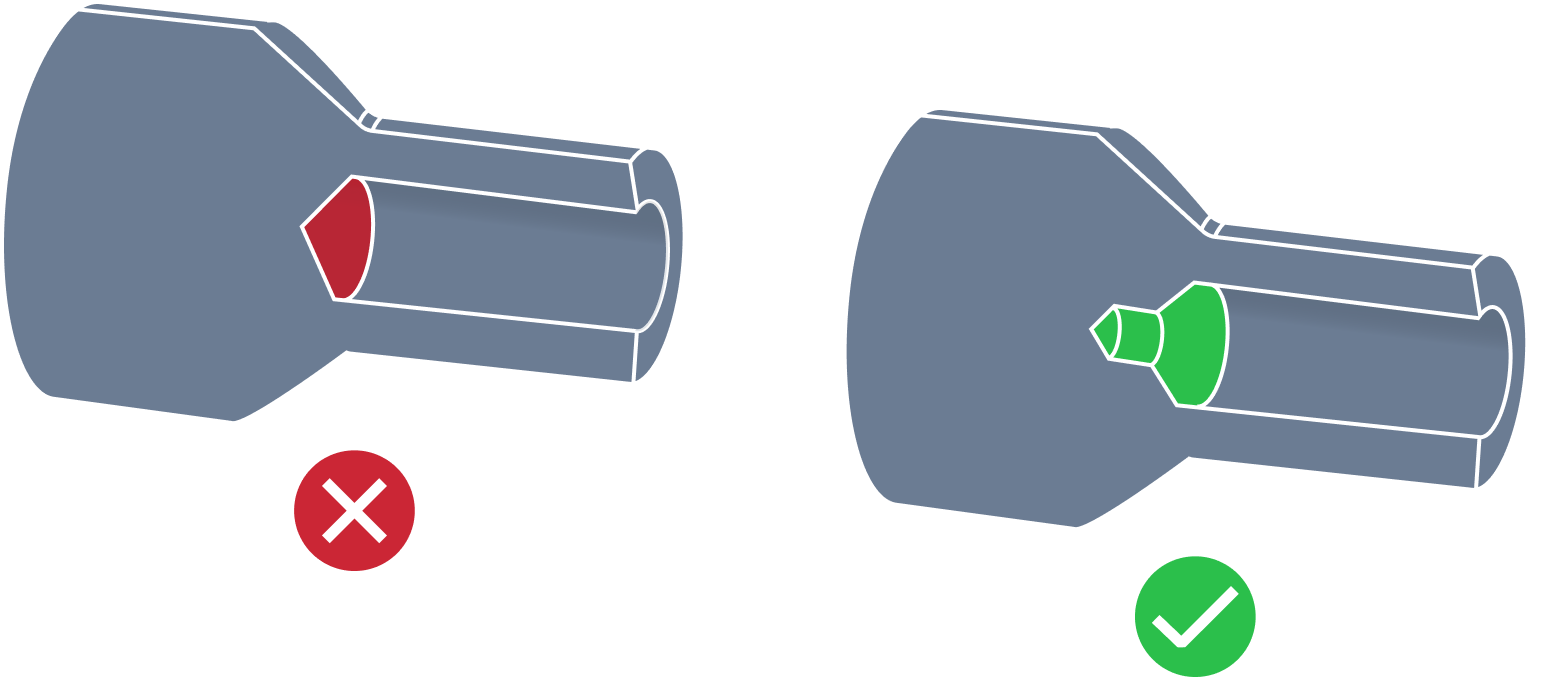
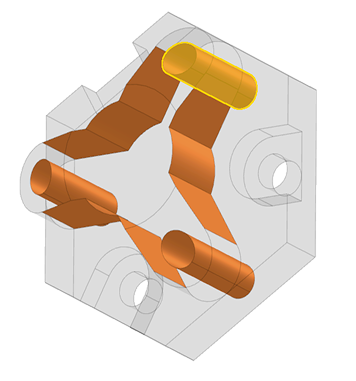
In CNC machining, a blind bored hole is a hole that does not go through the entire workpiece, i.e., it has a bottom. The relief depth of the blind bored hole refers to the clearance required for the tool used to drill the hole to operate effectively without getting damaged or breaking.
The issue of small relief depth occurs when the space available for drilling is limited, or the tool has a limited depth of cut, which restricts the depth of the hole that can be drilled. This can cause quality issues in the machined part, as the desired hole depth will not be achieved, leading to inaccuracies in the finished product.
Small depth blind bored hole relief detection conditions
MTK identifies this issue when the following condition is met:
where:
- — actual blind bored hole relief depth
- — actual blind bored hole diameter
- — expected minimum blind bored hole relief depth to diameter ratio
How MTK detects small depth blind bored hole reliefs
MTK automatically analyzes B-Rep CAD models for small depth blind bored hole reliefs. The SDK checks the relevant geometry against DFM criteria to identify potential issues that can increase manufacturing complexity or cost, or lead to quality or assembly problems.
Documentation and API reference
Detailed API reference for the small depth blind bored hole relief DFM check is provided in the MTK documentation, including issue classes, detection interfaces, and integration details.