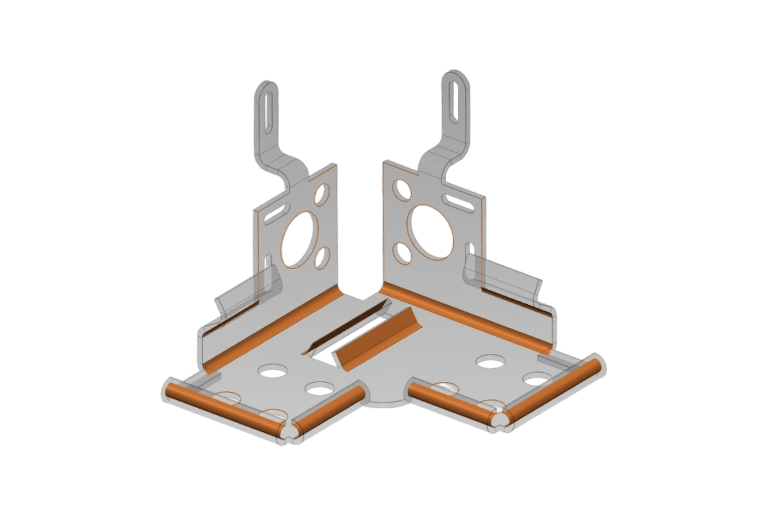
Small distance between bend and louver DFM check
Small distance between bend and louver overview
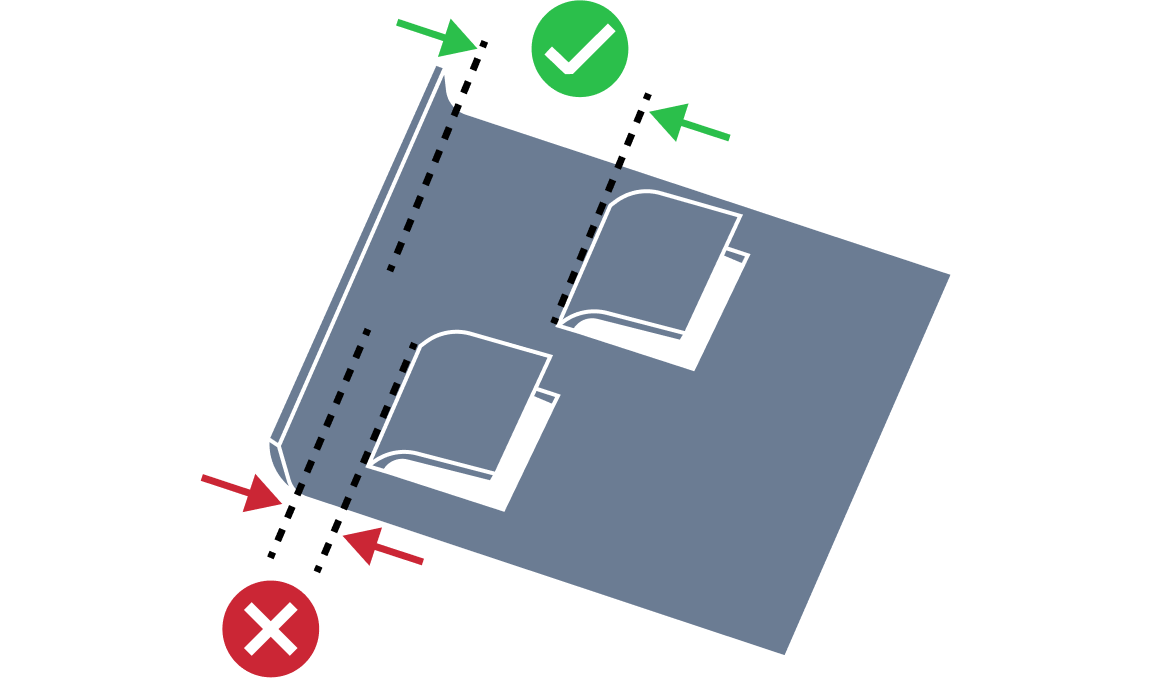
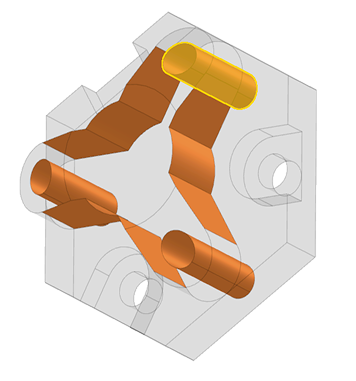
When the distance between these two features is too small, it can lead to a number of issues during the manufacturing process.
Firstly, it can lead to collision or contact, which may result in damage to the louver, the sheet metal, or both. This can also cause problems during the bending process, as the louver may get trapped or deformed in the bend, affecting the overall quality and functionality of the final product.
Furthermore, it can hinder the airflow, reducing the efficiency of the ventilation system, because louvers are typically used to allow for air circulation or to serve as an intake or exhaust system.
Small distance between bend and louver detection conditions
MTK identifies this issue when the following condition is met:
where:
- — actual distance between bend and louver
- — actual thickness
- — expected minimum distance between notch and bend to sheet thickness ratio
How MTK detects small distances between bends and louvers
MTK automatically analyzes B-Rep CAD models for small distances between bends and louvers. The SDK checks the relevant geometry against DFM criteria to identify potential issues that can increase manufacturing complexity or cost, or lead to quality or assembly problems.
Documentation and API reference
Detailed API reference for the small distance between bend and louver DFM check is provided in the MTK documentation, including issue classes, detection interfaces, and integration details.